
From the Cool Cat Teacher Blog by Vicki Davis
Subscribe to the 10 Minute Teacher Podcast and Cool Cat Teacher Talk anywhere you listen to podcasts.
So many students have IEPs but if we’re getting students ready for the “real world” we need to help them learn to self-advocate. Many may not realize that the rules governing learning disabilities in K-12 are not the same as college. Colleges can choose to say no to student needs. And it rests on the student to advocate.
Sponsored: Ellis, a program of Children’s Health Council, sponsored this podcast episode. All opinions are my own and that of the guest. Ellis pulls from a knowledge base on content from trusted partners like CAST, CASEL, Understood and others, and gives you evidence-aligned ideas for students who are struggling with learning, behavior, or the emotional side of school (but not clinical advice). If you’ve got a student (or two) who you can’t stop thinking about, try it and see what it brings you. No personally identifiable student information is collected, and it is a much better place to start than “brainstorming” with your general purpose AI chat tool. Try Ellis today.
Toby’s story is inspiring. She is open about her ADHD and how she was told not even to apply to college. Not only did she go to college, but she graduated with a 3.9 GPA and then earned her PhD so she could teach teachers. As the 2018 CHADD Educator of the Year, Toby not only is a great teacher, but she works to help teachers reach every student. In her bestselling book, The Traveling IEP, she shares her story and the advice parents and students need to navigate college and pursue their dreams of living a fulfilling, purposeful life, whether that leads to college or the business world. This is an important show for anyone who works with kids who learn differently, and that is pretty much all of us.
I was in the tracking of she’s never going to go to college. Well, here I sit with a PhD, but my guidance counselors were telling me, don’t even apply to college, you won’t get in.
Dr. Toby Tomlinson Baker, author of The Traveling IEP
Table of contents
- Listen to the Show
- Key Takeaways for Teachers and Parents from Dr. Toby Tomlinson Baker
- Resources Mentioned in This Episode
- About Dr. Toby Tomlinson Baker
- Free Resources for the IEP-to-College Transition
- Other Shows for Teachers Supporting Students Who Learn Differently
- Listen and Subscribe
- Episode Transcript
Listen to the Show

Watch this video on YouTube.Subscribe to the Cool Cat Teacher Channel on YouTube
For US Educators: One Bill Worth Watching
The RISE Act (S. 3589) would require colleges to accept a student’s existing IEP, 504 plan, or prior evaluation as documentation, instead of families paying for a new private evaluation. It was reported out of the Senate HELP Committee on July 30, 2026 and placed on the Senate legislative calendar on August 5, 2026 — further than it has ever advanced. Toby presented policy briefs on an earlier version of this bill. Now, note that this is a different bill from the AI bill also called the RISE Act. (S. 2081) They are not the same thing.
Key Takeaways for Teachers and Parents from Dr. Toby Tomlinson Baker
- The law changes the day they graduate. I learned this the hard way. I got my children retested because I thought it “carried over” to college. Well, in my experience, not really, because the college can choose to decline to accommodate even simple requests, like extended time. And when one of my dyslexic/dysgraphic children was required to handwrite a paper “because of AI” and then the prof went back and took points off the other papers, it was really disheartening. As Toby says, some of the best advocates for those with learning differences either have an LD or their children have one. I’ve lived this, and it is hard.
- Colleges can say no. I know a student who struggled to get a notetaker. She had to learn to advocate for herself. Often, colleges WILL NOT allow parents to advocate for many reasons. It is vital that we listen to Toby on this one and help them become self-advocates who build relationships with professors.
- Self-advocacy looks different for every student. Toby talks about the quiet students at the back of the classroom deserve advocacy as well. Theirs may look different but they need to learn to advocate for themselves.
- Accommodation shouldn’t be viewed as an advantage. As I have often said, if a student has a broken leg, you don’t make them hop. You give them crutches (or a scooter in my case) But even then, they move slower than everyone else. The crutches just give hope and a little help so they can make it.
Resources Mentioned in This Episode
- The Traveling IEP by Dr. Toby Tomlinson Baker — her Amazon #1 bestseller, part memoir and part practical guide to carrying accommodations from high school into college.
- Extraordinary Minds by Howard Gardner — the book I open the show with. Gardner’s argument is that extraordinary individuals “are distinguished less by their impressive ‘raw powers’ than by their ability to identify their strengths and then to exploit them.”
- Ellis — the free tool from Children’s Health Council that sponsored this week’s shows.
- tobytomlinsonbaker.net — Dr. Baker’s site, where she lists her op-eds and policy writing.
About Dr. Toby Tomlinson Baker
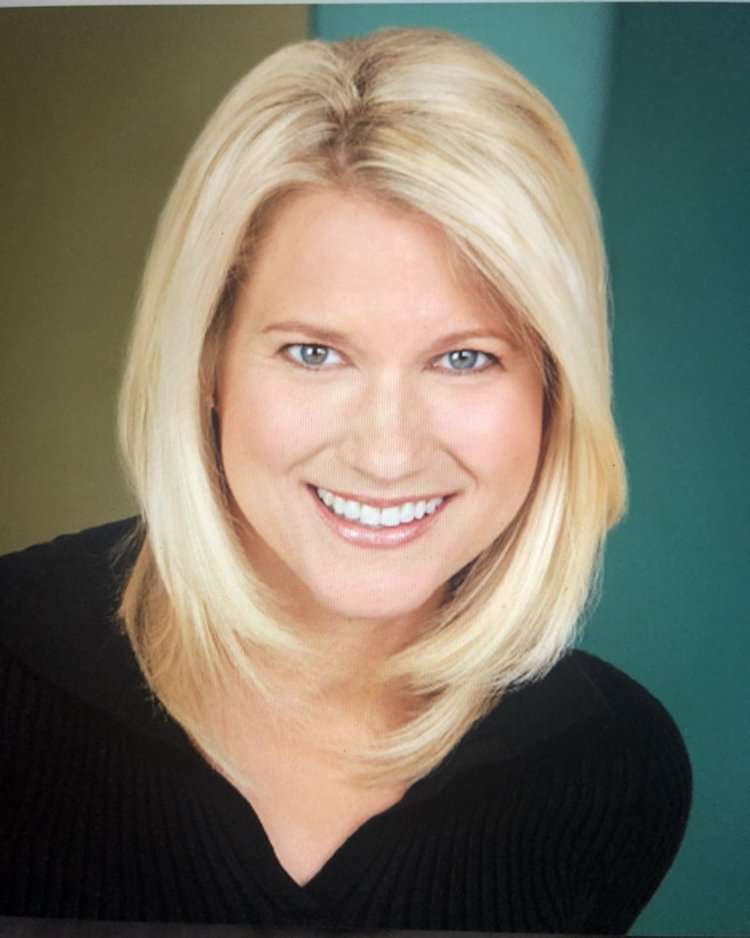
Dr. Baker has been a special educator for 13 years with the Los Angeles Unified School District and has been recognized a Top Performing Educator by the Superintendent. Dr. Baker has been recognized by Cal State-LA, Pepperdine Alumni Association, National Center Learning Disabilities in Washington D.C., the Learning Disability Association of America (LDA) and was the 2018 Children and Adults with ADHD-CHADD’s Educator of the Year. Dr. Baker was awarded the Top Education Policy Writer for the award-winning magazine Exceptional Needs Today and was on the cover with her story.
Dr Baker has written numerous Opinion Editorials and presented policy briefs to the Department of Education, National Organization of Disability, Congress, Tom Ridge Policy Group, Senator Robert Casey, who drafted the RISE Act, and the White House. She continues to share the story of her educational journey and her strategies for success in her Amazon #1 bestseller, The Traveling IEP!
Connect: LinkedIn · tobytomlinsonbaker.net
Free Resources for the IEP-to-College Transition
Every link below was checked and is free. I’ve split them by who they’re for, so you can send a counselor or a parent straight to their section.
How is your school helping students with learning differences be ready? This doesn’t mean that you stop accommodating; in the US, that is not legal. However, you can help students learn to self-advocate. Look through the resources tomorrow with your team and find something that works for your students. Go ahead and plan a self-advocacy activity for your seniors. Put it on your planning calendar.
For Teachers
- Student Rubric for IEP Participation (I’m Determined, Virginia Dept. of Education) — a student scores themselves on how much they actually participate in their own IEP meeting, then gets a concrete next step. Fillable PDF. This is one you can use with your high school students and you may choose for this to come from those who work with the student and their special needs.
- The One-Pager (I’m Determined) — one page where a student lists their Strengths, Preferences, Interests and Needs. It’s the document they hand a professor or a disability services office instead of a 30-page IEP. There’s a free web app too.
- ME! Lessons for Teaching Self-Awareness and Self-Advocacy (Zarrow Center, University of Oklahoma) — ten units of lesson plans in Word and PowerPoint that you’re explicitly allowed to download, edit, and use free.
- Self-Advocacy Strategy to Teach Student Involvement in the IEP (NTACT:C) — the research base behind teaching students to lead their own meetings, with the studies behind it.
- Free Transition Assessments (VCU Center on Transition Innovations) — this annotated list helps prepare students for life after high school.
For Parents
- Students with Disabilities Preparing for Postsecondary Education: Know Your Rights and Responsibilities (U.S. Department of Education, Office for Civil Rights) — the official explanation of exactly what Toby describes in this episode. It’s public domain, so you may copy it and hand it to anyone. (Revised 2011; I’m not sure if it will be updated but it should still be correct here.)
- 7 Things to Know About College Disability Services (Understood) — the reality check. No case managers exist in college. Your student registers themselves. The accommodation letter goes to them, not to the professor.
- Which Laws Do What: IDEA, Section 504, and the ADA (Understood) — the one-screen version of the legal handoff.
- CEDAR Database (National Center for College Students with Disabilities) — direct contact information for the disability services office at nearly every college in the country. This is how you find the actual human to call before a campus visit. Note: this site is no longer being updated due to funding, but the directory is still live.
- Preparing for Adulthood (PACER Center) — including what changes legally the day your child turns 18, which blindsides a lot of families.
For Students
- Your IEP Meeting: A Great Place to Practice Self-Advocacy Skills (PACER) — a one-page tip sheet written to the student, with an on-ramp for anyone who hates meetings. (Note: the age-14 rule it mentions is Minnesota-specific; federal law requires an invitation at 16.)
- When College Professors Refuse Accommodations (Understood) — the scenario every student fears, and what to actually say.
- O*NET Interest Profiler (U.S. Department of Labor) — a free, 20-minute career interest inventory. Toby’s whole point about “what can’t you wait to get up and go do” starts here.
One AI Prompt You Can Use Today
Paste this into whatever AI tool you use. The first is for the adult doing the research. I also drafted one for a student to ask the AI to be a “coach” on asking, but in the end, I really think this should be done with an adult or trusted advisor instead of AI so I struck that idea. As always, this is not intended to give any legal advice but to help you get started. Also remember to keep all PII (personally identifiable information OUT of AI.)
For parents and guidance counselors — researching a specific college:
I am helping a high school senior with an IEP for [DISABILITY/LEARNING DIFFERENCE] prepare to attend [COLLEGE NAME]. In high school their accommodations include [LIST ACCOMMODATIONS].

I understand that IDEA no longer applies in college and that the school operates under the ADA and Section 504 instead, which means accommodations must be requested rather than provided automatically.

Help me build a preparation checklist that covers:
1. What documentation this college is likely to require, and how recent it must be
2. The exact steps to register with their disability services office, and when to start
3. Which of the accommodations listed above are commonly granted at the college level, which are commonly denied, and why
4. Ten specific questions to ask the disability services office on a campus visit
5. What the student — not the parent — will need to do themselves, and what that means for FERPA once they turn 18

Tell me clearly which of your answers are general to all colleges and which I must verify directly with this specific school. Do not guess at this college's individual policies. Include hyperlinks to all information that you find. If something does not have a hyperlink, verify the information.
Other Shows for Teachers Supporting Students Who Learn Differently
- The Beautiful Nuance of Neurodiverse Classrooms – Season 5 Episode 6
- Misconceptions about Kids with Learning Differences in the Classroom – Dr. Rebekah Dyer
Listen and Subscribe
If this episode helped you think differently about a student, share it with the teacher down the hall who needs it — and leave a review wherever you’re listening.
Episode Transcript
This transcript was generated using AI and has been reviewed by humans for accuracy. Minor errors or artifacts may remain but I worked my best to find any issues with the transcript as I reviewed the show. – Vicki
Click to read the full transcript
Vicki Davis (00:00): Howard Gardner, in his book, Extraordinary Minds, says exceptional individuals have a special talent for identifying their own strengths and weaknesses. We want to help our students be exceptional as they transition from high school to college. But what happens when students who have a weakness have to advocate for themselves in college? Did you know that when a student with a learning difference graduates from high school and enrolls in college, according to the law, the accommodations that were required in high school become accommodations they have to ask for in college, and the university is allowed to say no.
If you work with or have a child with a learning difference, this is must-have advice.
Announcer (00:46): This is the 10-Minute Teacher Podcast with your host, Vicki Davis.
Vicki Davis (00:50): Today’s show is sponsored by Ellis, a free tool from Children’s Health Council that helps teachers think through tough student moments and find practical next steps. Tune in at the end of the show and I’ll tell you more about Ellis. Today we’re talking with Dr. Toby Tomlinson Baker, a nationally recognized special education expert. She earned her Ph.D. in global leadership and change from Pepperdine University and is an adjunct professor at California State University, Los Angeles.
And Dr. Baker is the best-selling author of The Traveling IEP. Toby, how has your own experience as an educator with a disability shaped your perspective?
Dr. Toby Tomlinson Baker (01:38): As a child, in about 1987, I was diagnosed with a learning disability. In my 40s, I was diagnosed with ADHD because in the 80s, many women can attest to this. They weren’t diagnosed with ADHD. They were just little bubbly girls and talked a lot.
My experience as. Student with a learning disability and ADHD, I make connections with the students right on. I’ve done that. I was the one that teachers didn’t want to have on their list.
I was the one who needed extra help. Lectures didn’t work for me. I needed visuals. I’ve collected strategies that teachers need to employ these in their classrooms.
I went to six different schools, K through 12. So every other year, I went to a new school. Now looking back, what it taught me was I was privy to all different types of teachers. So I was able to see the good teachers, the teachers that did hands-on learning, student-centered learning, spatial learning.
And then there were some who were straight in rows, looking at the front, parochial school. There were different types of learning environments. I learned to advocate at a very young age because if I needed help with something, I had to either go to my parents who would then go to the teachers who, if they didn’t listen, then they had to go from the teachers to the administrators and the administrators to the superintendent. And it was like a whole thing.
This is why I wrote The Traveling IEP is because. What happens in the law after you graduate from high school, yes, you still have an IEP, but when you go right from high school and enroll in a college, the national law switches from IDEA coverage to, ADA coverage so the laws actually change for the coverage when you go to college so when I went to college I went from having all these supports to all these little layers and so it was much different and that was why in my heart I had to, I had to write The Traveling IEP, I have met so many parents, wonderful parents who reach out to me every day thanking me, for my story because it’s a memoir. And now we’ve got assistive technology and all of these things that we can use. We need to show the parents and the teachers together how are the students going to move from elementary school, middle school, high school, and then into college.
And then if they choose not to go to college, what are they going to do instead as adults?
Vicki Davis (04:18): One thing I work really hard to teach the parents of the students I teach who have learning differences is that our goal is to help our students advocate for themselves because they won’t be able to put their parent in their backpack. And what do you tell them to do so they can learn to advocate?
Dr. Toby Tomlinson Baker (04:37): Some of the things that I did to advocate for myself and then I teach others how to advocate. When I met professors, oftentimes I was 17, 18, 19 years old, and here’s a 50-year-old man telling me that they’re going to give me a grade. And I had to figure out how I was going to communicate my needs, my accommodation. So do you know what your accommodations are?
I needed to sit right up front. So I would have to sit and write in the in a notebook and then we would go to the library and I’d copy my friend’s notes or sometimes I had an actual tape recorder and we had to um, I had to go to the dean by myself at 17 or 18 or 19 and say, this is what I need. How are we going to make this happen? So not everybody is articulate as me.
I’m a little bit feisty. And a lot of it is personality differences. Sometimes you have students sit in the back of the classroom because that’s where they’re most comfortable or they’re shy and introverted. And that’s OK.
They won’t necessarily go to the dean and get in their face a little bit. They won’t go to office hours. They won’t go somewhere early. Maybe they sleep in because they really need the sleep.
So these are just things that I think about when they’re advocating. What does advocacy really look like? It’s different for everybody.
Vicki Davis (06:03): One thing, and this just comes from working with my own children, is that you’re not asking for a gimme. You still got to do the work. You still got to show up. You still got to come to class.
You’re going to study more than everybody else because that’s just a fact. You’ve got to. And so learning how to professionally, respectfully advocate, what are some of the most common misconceptions and misunderstandings that educators and sometimes even parents might have about kids with learning differences?
Dr. Toby Tomlinson Baker (06:33): When I did my dissertation at Pepperdine, I interviewed professors and did just what you said. What do you know about special education law and, you know, changing your style a little bit? Two of the things that I found, one, 100% of them did not know special education law. Nobody goes and studies case law.
They get their schedules together, their books together, their itinerary. They don’t go look at the disability. They should, but they don’t always go look at the disability law. And the other thing is what I found was the professors that did know something about disabilities and were really engaged with their students with learning differences was that they themselves had learning differences.
Some of the professors had learning differences themselves. One of them had dyslexia. Then also they had kids with learning differences themselves. So they had kids at home who had IEPs.
So they were able to transfer that knowledge of what they had learned at home or in school to their college setting. But that doesn’t always happen. it. So I said, what accommodations?
They had no idea. They said, well, I just do whatever the accessibility office requires. So I They lean very, very heavily on use the college. There’s this toss between use the college and the professor.
If I don’t know, I don’t have to do it. So I was very much like, you need training. You need to ask.
Vicki Davis (08:07): The Traveling IEP, your book, is a bestseller. So how do you think it has changed the way that educators and parents approach IEP?
Dr. Toby Tomlinson Baker (08:17): Well, one of the resources that I offer, I have this wonderful visual that I came up with in the book and also in my research that’s published. When you think of an IEP, I can’t even tell you how many IEPs I’ve written in my life. That’s why I wrote about IEPs because I’ve been doing this since 2004. They represent a person.
So when somebody says there are too many IEPs, well, are there too many students with learning differences? No, they have learning differences. They need these accommodations. That’s part of it is it is individualized.
I always say in my class that when I was teaching, I had what we call a special day class. I don’t just have one lesson or two lessons. I had 15 lessons. How many kids there are?
That’s how many lessons you have. So the thing about the IEP is, In high school, K through 12, you have this accommodation as free appropriate public education. However, because the law changes in college, they are not transferred. And so what are the accommodations that you have under the IDEA law are not applicable in college.
They do not always transfer. So when a student goes to college and says, I need note-taking and this and that, the university has the right to say no.
Vicki Davis (09:44): It’s heartbreaking because they’re not required and it’s a fight. Some people want to act like you’re giving kids an unfair disadvantage when you give them accommodations. But if you had somebody with a broken leg, you wouldn’t make them hop. You would at least give them crutches.
And even with crutches, they’re not going to go as fast as a person who has both legs. But they at least have a hope of getting one direction to another, even with more effort. It’s unfair to ask them to hop when you could give them crutches. What are you hearing from people?
Dr. Toby Tomlinson Baker (10:17): One of the things that I always convey to parents, and this is why they keep coming and buying my book and meeting me, is I struggled with the fact that the age-old question, am I smart? When I was a kid, they did tracking. They still do some sort of tracking. People who don’t know what tracking is, tracking is when you’re in school, they sort of sort out who’s smart, who’s gifted, who’s maybe has a learning difference, needs to have an assessment.
They have to assess for giftedness too. And before you can be diagnosed by a school psychologist or a licensed psychologist, once you’re diagnosed. I was in the tracking of she’s never going to go to college. Well, here I sit with a PhD, but my guidance counselors were telling me, don’t even apply to college, you won’t get in.
Well, I said, thank you very much and some other wonderful things and went and applied and got into college and graduated with a 3.9. Yeah. So I have told my parents, my students, all of them when I speak and I tell you here today, don’t let anybody tell you what you can and can’t do. That’s right.
You decide what you’re going to do. I decided I was going to go to college, get a Ph.D. and teach college. And here I sit doing that, even though nobody thought I was ever going to graduate from high school. They didn’t think I could graduate from high school.
They didn’t think I’d go on and go to college. Oh, she’ll never get a job. I hope she marries well. That was something else.
Oh, you better get married or somebody will take care of you. Well, I just happen to make a lot of money at my job and I do very well. Thank you. So when I hear people say because they have a learning difference, they’ll never be able to.
And I’m like, don’t let anybody tell you. You don’t tell people that they aren’t smart. I am smart. I know I am.
What inspires students with learning differences or even just in general? What do they really want to do? What can they contribute? Because once they get that, if they’re struggling in school, they can hyper-focus.
I hyper-focus. When I have 42 IEPs to write, I got to boom, boom, boom, get them done. Schedule it out, and I’ve got stickies and post-its, and I’ve been doing it for years. That’s my masterpiece.
Vicki Davis (12:43): Somebody listening to this show needs to be hearing what you’re saying, Toby, about they told me not to go to college, and I went and doggone it, I have my PhD and doggone it, I didn’t need anybody to take care of me. I’m taking care of myself. Like, that’s a message.
Dr. Toby Tomlinson Baker (12:58): When I join my class for my sessions that I teach, I tell them I have, you know, ADHD. I was diagnosed. I tell them my story. I’m like, you know what?
I’m okay with me and I want this to be a safe space for learning. All of a sudden, these other students who had registered with the Office of Accessibility, Oh, professor, I do too. And really, teachers need to think, how can I change me so that all students can learn? You need a connection, the student-teacher connection.
That’s what it is.
Vicki Davis (13:32): I always say you have to relate to educate. You have to relate to educate. That’s what underlies great learning is relationship. It’s about belief that every human has something to contribute.
I call my classroom Masterpiece Theater. I tell kids that each person has unique talents and skills and facets of their personality that they can just really shine. And who are we to disparage another human being? The book is The Traveling IEP, a best-selling book about helping improve individualized education plans.
Look at the show notes, follow Toby, learn what she does, pick up the book, and advocate, advocate, advocate, and believe in your children. Thank you, Ellis, for sponsoring this week’s shows on The 10-Minute Teacher. Ellis is a free tool for K-12 educators from the Children’s Health Council. Here’s how it works.
You type in what actually happened with a student, what you saw, what you already tried, and where you’re stuck. Then Ellis gives you practical, evidence-aligned next steps from a knowledge base of content from trusted partners like CAST, CASEL, Understood, and others. Ellis gives you information, not clinical advice, and it doesn’t collect personally identifiable student information. It’s a far better place to start than general purpose AI tools because Ellis isn’t pulling from the open internet.
So the next time you leave school still thinking about that one student, go to coolcatteacher.com forward slash Ellis. That’s coolcatteacher.com forward slash Ellis. Thanks for tuning in to the 10-Minute Teacher Podcast. Watch the video version of this podcast and catch my new radio and TV show, Cool Cat Teacher Talk, on YouTube and a radio or TV station near you.
Join my Cool Cat Teacher Classroom Matters newsletter at coolcatteacher.com forward slash newsletter. Leave a review if you found this helpful. See you later, educator.
Disclosure of Material Connection: This is a sponsored episode and blog post. Ellis, a program of Children’s Health Council, has compensated me to share information about Ellis. However, all opinions expressed are my own. I have personally reviewed these resources and only recommend tools I believe offer genuine value to classroom teachers. My endorsement is limited to the educational products and services discussed in this episode. I am disclosing this in accordance with the Federal Trade Commission’s 16 CFR, Part 255: “Guides Concerning the Use of Endorsements and Testimonials in Advertising.” The sponsor has no impact on the editorial content of this show. This post also contains affiliate links to books mentioned in the episode; if you choose to buy, I may be paid a commission at no additional cost to you.

The post What Happens to Your Student’s IEP After High School? appeared first on Cool Cat Teacher Blog by Vicki Davis @coolcatteacher helping educators be excellent every day. Meow!
If you're seeing this on another site, they are "scraping" my feed and taking my content to present it to you so be aware of this.
from Cool Cat Teacher Blog
https://www.coolcatteacher.com/e972/

No comments:
Post a Comment